

PPC (Pay per Click) is an online advertising model in which advertisers pay the platform for each user click on an ad. This is one of the most effective online advertising schemes that promote business on the Internet. A PPC specialist is a person who sets up and manages contextual advertising. He understands who and what to show, how to present a UTP (unique selling proposition) and make the right link. He is a “master of advertising campaigns”, because advertising, as before, remains the engine of trade. Further in the article we will analyze from “A” to “Z” how to become a professional in this niche and be in demand, how to start a career from scratch, receive a decent salary, and what is needed for this.
Who is a PRC specialist?
A PPC specialist is a professional who specializes in creating and optimizing advertising campaigns based on the pay-per-click model. This is a very diverse profession, because a person who holds this position must have various knowledge/skills: working with ads that sell, selecting semantics for launching advertising, setting up an advertising campaign, including a targeted one. In addition, such a specialist must be able to use various Google tools necessary for advertising campaigns (Google Adwords, Google Analytics, etc.), work with Analytics, and plan an advertising budget.
The goal of a PPC specialist is to maximize the price reduction for a particular customer action (click/transition) and increase conversion. Contextual advertising specialists not only influence what users will see in search, they help businesses attract new customers and return old ones.
One of the advantages of working in the PPC field is its dynamics. You will see the results of your activities quite quickly, and in most cases you won’t have to wait six months to understand whether your strategy is effective. And in terms of self-development, you simply won’t be able to stand still: the field is constantly and rapidly evolving.
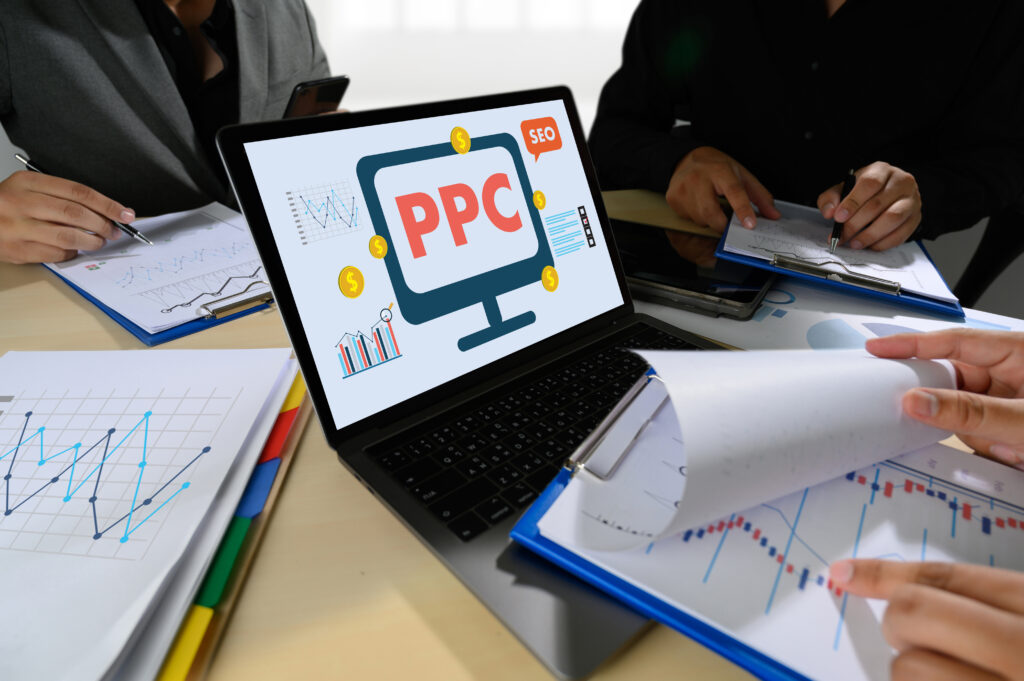
Duties and tasks
The tasks of a PPC specialist include the development, management, and optimization of advertising campaigns that operate on a pay-per-click model. In particular, they:
- They write texts for contextual advertising.
- They create content for banner advertising, including graphic content.
- They set up and launch advertising campaigns.
- Analyze and monitor how well the advertising worked.
- They decide what needs to be changed and improved to reach more of the target audience.
- They conduct tests, experiments, and prepare reports.
Such an employee also launches advertising campaigns on social networks - Instagram, Telegram, Facebook, that is, he works at the interface with SMM. We see the results of his work every day when we go to search engines, where contextual advertising ads are displayed on the first lines.
The responsibilities of a RRS specialist are as follows:
- Setting up, launching, maintaining, and optimizing advertising campaigns in Yandex Direct and Google AdWords.
- Setting up and running retargeting advertising campaigns.
- Working with the query core: selecting keywords, writing headlines/ad texts.
- Working with web analytics systems.
- Regular monitoring and analysis of the effectiveness of advertising campaigns in order to achieve key indicators.
- A/B testing of advertising campaigns.
- Cost optimization.
- Assessing the quality of traffic attracted (building and analyzing traffic and sales funnels).
- In-depth analysis of competitors: budgets, requests, unique offers.
- Preparation of reports.
Pros and cons of the profession
The profession of a PPC specialist has its advantages and disadvantages, which may influence the choice of career path. Let's start with the advantages:
- The profession is developing and remains in demand.
- The salary is quite high. If you are an experienced professional, there is a chance to get a job at a large company, taking your place in a promising niche.
- This is interesting, because a specialist in RRS is constantly learning something new.
- You can work not only in the office, but also remotely.
- You can master a specialty without experience or skills.
As for the disadvantages, they are:
- The work is not easy and painstaking. You need to be diligent, pay attention to even the smallest details/numbers. There is less creativity here, but more accuracy.
- Responsibility – a contextual advertising specialist is responsible for the money allocated to him and must distribute the budget wisely.
- Sometimes PPC specialists have their hands tied, especially in certain areas. For example, in the medical field, there are many limitations that need to be taken into account. There are highly competitive areas where it is not easy to break through. The tasks can be incredibly complex.
However, if you are willing to work, learn about the system, and improve your skills, the disadvantages will quickly transform into a professional challenge.

Salary level of RRS specialists
A relevant question for most. It is difficult to give a definite answer, since rates are different in different regions, as is the set of requirements. Therefore, each vacancy should be analyzed separately. On the Work.ua platform, PPC managers' salaries vary depending on the level of experience and the employer company. Average salaries are 20,000 UAH. The scale by region is presented in the table below:
| City | Salary (in UAH) |
| Kyiv | 20-50 000 |
| Lviv | 15-30 000 |
| Odesa | 20-40 000 |
| Sumy | 15-35 000 |
| Uzhhorod | 20-30 000 |
| Kharkiv | 20-35 000 |
| Remotely | 10-20 000 |
For comparison, let’s look at the earnings of PPC specialists abroad. According to PayScale, the average salary for a PPC manager in the US is $58,653 per year, but the salary range can vary up to $79,671. In Dubai, this figure is 147,002 dirhams (AED) or about $40,000, in the UK – from £28,000 to £48,000, and in Germany up to €42,700 per year.
Professional development
Mostly, PPC specialists need to go from junior to middle and senior to reach a high level and become in demand.
Junior
Young specialists have initial knowledge and work experience of about six months. They mostly work under supervision. A junior specialist can claim a salary of 400 to 550 euros.
Middle
Specialists are more experienced, have been working in this field for 1 year, are able to make decisions independently, and perform the necessary tasks. The salary is about 1,000 euros.
Senior
An experienced specialist with a wide range of knowledge and skills, who understands all the nuances of advertising campaigns. Has a decent salary - the amount can exceed 2,000 euros.
How to become a RRS specialist
To become a competitive player in the contextual advertising market, you need to have a considerable amount of knowledge and the following Soft Skills:
- analytical mindset;
- perseverance and concentration of attention;
- ability to work with large amounts of information and statistical data;
- understanding customer needs;
- searching for new options for solving problems;
- creative approach and creativity, willingness to experiment.
Let's highlight a set of Hard Skills that will help you become a sought-after PPC manager in the context advertising niche:
- Knowledge of PPC platforms such as Google Ads, Bing Ads, Facebook Ads, etc.
- Ability to analyze and interpret data from Google Analytics and other analytics tools to evaluate campaign performance.
- Keyword research and CPC optimization skills.
- Writing effective advertisements.
- Knowledge of conversion optimization techniques to increase the ROI of advertising campaigns.
- Experience in conducting A/B testing to determine the most effective strategies.
- Basic understanding of HTML and CSS for editing promotional materials and landing pages.
- Skills in managing advertising campaign budgets, including cost tracking and optimization.
A good RRS specialist is able to identify cause-and-effect relationships between any specific actions, can multitask, and is not devoid of creativity (can correct text, change banner design, etc.).
Training options
To become a PPC specialist, there are many training options you can consider. Here are a few:
- Online courses. For example, Google Ads Certification, a free course from Google that teaches the basics of advertising on Google Ads. Facebook Blueprint, official courses from Facebook to learn advertising on Facebook and Instagram. Coursera offers courses on PPC and digital marketing from leading universities and companies. Udemy also has numerous courses on PPC marketing from industry experts.
- Seminars and webinars. Numerous webinars and seminars are hosted by PPC experts who share their knowledge and strategies.
- Specialized training centers. There are many training centers that offer PPC marketing courses on-site or online.
- Conferences and workshops. Attend PPC marketing conferences and workshops to learn, network, and share experiences with other professionals.
- Self-study. Use books, online resources such as blogs, videos to learn new PPC strategies and techniques.
- University programs. Some universities offer specialized courses or programs in digital marketing that include PPC training.
Training options can vary in cost, duration, and amount of material, so it's important to choose the courses and resources that best meet your individual needs and career goals.
The PPC profession is attractive for its career opportunities, high demand in the job market, and competitive salaries, especially internationally. It is a good choice for those interested in digital marketing, data analytics, and online advertising.
